Stories and poems

"The metaphoric image of 'orphan lines' is a contrivance of the detached onlooker to whom the verbal art of continuous correspondences remains aesthetically alien. Orphan lines in poetry of pervasive parallels are a contradiction in terms, since whatever the status of a line, all its structure and functions are indissolubly interlaced with the near and distant verbal environment, and the task of linguistic analysis is to disclose the levels of this coaction. When seen from the inside of the parallelistic system, the supposed orphanhood, like any other componential status, turns into a network of multifarious compelling affinities.'
Roman JAKOBSON, "Grammatical Parallelism and its Russian Facet", Language, 42/2, 1966, pp. 399-429, p. 428-429

Wednesday, October 19, 2011

On Rain, and Gardens

Rain. My pants are wet because even if it rains I still have to go teach those little boys English and even though yesterday, in preparation, I bought a wonderful yellow bike poncho, I didn't fully understand how to use it until I was almost done with my ride. You can put the yellow poncho all the way over your hands and the handlebars. That is what the poncho is for, in fact, but I didn't understand that until my hands were cold and my pant legs were wet. I was happy that the rest of me was dry, my wool jacket and backpack. I am now enjoying the relative dry warmth of my office.

October just came. I ignored the fall and kept on riding and hiking and writing. Or re-reading. Mostly I've been re-reading, and correcting, then re-reading again. Does it make more sense this time? Do I understand it better now? Soon I will hand in pages, I have already handed in some. I will hand in some more. Nobody cares about how much time it takes to make a sentence right. What I'm interested in now is finishing. I gave myself deadlines. I shared them with my advisor. But we are all busy with la rentrée and she hasn't taken the time to read them yet. That is just as well. I still have some time, to turn another sentence around.

I am wearing glasses because the doctor told me the computer screen tires my eyes; my eyes don't work together. The prescription in my glasses is an old one, and I need to renew it. But for now they will have to do because I can't afford new ones. I feel my eyes are protected nevertheless. My eyes were red and tired and itchy. I have a sty that won't go away, and a cold sore. The results of a summer of work? My eyes are tired of writing. My eyes are tired of the world. I don't always like what I see. I wrote a poem about that. It isn't finished yet.

Here is a memory, of a garden, with friends, after the rain.

In the Garden After the Rain

The smell of water on grass
or as it begins to fall
on dust and stone.

The precise movements of birds,
from limb to branch,
from tree to roof.

The dark light penumbral,
wet grass running,
the lightness of bodies
in the garden after the rain.

It may have been spring, it may have been the fall. I'm not sure anymore, but I forgot, through all this sunny autumn, how much I like the rain, even when I have to ride in it and I am wet. Even when I hate the cars, hate the buses, hate the city rising up and around, hate being pushed around. I love the rain, and I can imagine the world as one big garden. 

There is a Jack Gilbert poem I love about gardens:

Ovid in Tears

Love is like a garden in the heart, he said.
They asked him what he meant by garden.
He explained about gardens. “In the cities,”
he said, “there are places walled off where color
and decorum are magnified into a civilization.
Like a beautiful woman,” he said. How like
a woman, they asked. He remembered their wives
and said garden was just a figure of speech,
then called for drinks all around. Two rounds
later he was crying. Talking about how Charlemagne
couldn’t read but still made a world. About Hagia
Sophia and putting a round dome on a square
base after nine hundred years of failure.
The hand holding him slipped and he fell.
“White stone in the white sunlight,” he said
as they picked him up. “Not the great fires
built on the edge of the world.” His voice grew
fainter as they carried him away. “Both the melody
and the symphony. The imperfect dancing
in the beautiful dance. The dance most of all.”

I went to Marseille for a last weekend of summer. White light and white cliffs, the soft blue sea sweetly supporting me. I keep returning to that memory, as if to a garden.

I haven't cried in while.

Thursday, September 29, 2011

Muse

Monument in Cordoba to Ibn Zaydûn and Princess Wallada
September has slipped away in a sunny haze, end of summer, busyness and bees. Some goals were achieved. I have found some work to keep me writing through the end of the year, now I just have to get back to the writing. Interestingly enough, I'm helping various children write, which allows me to tap into my own desire to write. I wonder at that easy creativity children have, which goes along, I think, with a refreshing and spontaneous naivety. Afterwards, leaving the tutoring session on my bike, I let myself laugh.

I went to a poetry group, which was also refreshing, and gave some air to my poetic thoughts. It made me want to write more. Words and words and words, en boucle; it helps, as though I could put myself in a room of words and wrap myself up tightly there, and stay, and stare, but not alone. Exchange around writing is a necessity, and words engender words, in the presence of others, please. But how does that suit our idea of authorial invention and the private property of the written word? I think it's poppy-cock, and that my poetry is never mine. That's not to say though that I wouldn't want to call what I write here mine, because it is. There's a conundrum: how creativity can be so completely from somewhere else yet pass through this body, at this time.When writing, or singing, there is like a breath which comes from behind and passes through the exact center of the head, then out of the mouth, or the hand. One knows not from whence it comes. Other poets have called it inspiration, or personified it in the figure of the muse.

I wrote a poem once on being my own muse: 

On being my own muse

I would no longer need the body of another to feed my words if I could write like wrapping myself in seamless white linen, having woven the fabric, etching words with thread, tying the knots that keep me in.

Ultimately, I think this poem  is about a desire for self-sufficiency, not separateness. The idea is that the words keep me in, define me, and that their source is within, they don't come from the outside, the result of some exterior passion or pain. I think it's about the wish for the source of poetry to be interior joy, even though the image is quite morbid. In this poem I also see a funeral shroud. I see the death of the poet. 

A medieval writer and princess from Cordoba named Wallada Bin Al Mustafki had her poems embroidered on her robes. She wore them in the street. She also had many lovers and her passions inspired her writing. This is apparently what those embroidered verses said:

For the sake of Allah!  I deserve nothing less than glory 
I hold my head high and go my way
I will give my cheek to my lover
and my kisses to anyone I choose. 

I think she was her own muse.

Wednesday, September 14, 2011

Meaning

The Meaning of Night
I'm looking for jobs. I'm still looking for meaning. I'm reading another book by H. U. Gumbrecht called Production of presence: What meaning cannot convey and I'm wondering how he hopes to go beyond meaning. But I probably should get back to practical things, like money, like work; maybe that is what he means by the production of presence. Or maybe I should get back to meaning.

Still wrestling with my chapter on the De Nuptiis, I'm reading the Metalogicon by John of Salisbury. Here is a wonderful thing he has to say about meaning:

Le sens en effet est la signification du mot. Et s'ils lui font défaut, une parole est vide et inutile et pour ainsi dire morte, de sorte que, d'une certaine façon, de même que le corps reçoit sa vie de l'âme, la signification du mot lui sert à vivre (p. 170).

This is the French translation by F. Lejeune, published in 2009, and luckily so for me since I would have been slower to integrate the Latin. The translation also solves the problem of quoting him in French in my dissertation. Thanks to en excellent index, I have also quickly been able to find out who Philologia was for John of Salisbury. Here is my English translation of the passage from the French.

"Meaning is indeed the signification of a word, without which the word is dead, since, in a way, like a body which depends on the soul for life, the signification of a word allows it to live."

Another English translation gives:

"A word's force consists in its meaning. Without the latter it is empty, useless and (so to speak) dead. Just as the soul animates the body, so, in a way, meaning breathes life into a word".

This is Daniel McGarry's translation, p.81. Here is the Latin

vis enim verbi, sensum est; quod si destituatur, sermo cassus et inutilis est, et, ut sic dixerim, mortuus: ut quodammodo, sicut corpus ad vitam vegetatur ab anima, sic ad vitam quamdam verbi sensus proficiat.

The word vis gives force in English and signification in French, which comes from the Anglo-Norman  significaciun, according to the O.E.D. Sensum gives meaning in English and the French sens, which feels more natural since it is closer to the Latin. I'm not sure where all this is going, but, in any case, these different translations show the circular nature of signifying : word, meaning, meaning, word. I think John is right; you can't seperate word from meaning without a kind of death.

So what's the point of Gumbrecht's book? I think he is tired of meaning, all sorts, and wants to imagine an entirely other type of intellectual activity that could rise above hermeneutics. But couldn't this be the soul-death of the discipline? Where would we be without meaning? He uses Heidegger's essay "The Origin of the Work of Art," an essay which I once found terribly problematic in terms of how it represents work and how it represents art, as well as his concept of Dasein, being in the world, not interpreting it or being a subject in it. Still, I like Gumbrecht's book, though I haven't finished it yet. I like his attempt to surpass meaning, sort of like a meditative mind clearing, a move to having no head and non-being (his last chapter is entitled To Be Quiet for a Moment: About Redemption). Maybe it is about embracing that death.

I'm having trouble picking a poem today. I have lots of poems which contain the word meaning. I think I'll put one I wrote while mourning the death of meaning, blaming it on men, of course. 

Last War

These men would destroy meaning with
a force equal to the bomb.
Love turned to contract,
its attributes of folly 
which are feeling.

A world without meaning
or feeling like a funeral shroud,
a winding sheet of white
which death announced and called for
as necessity.

These men would destroy meaning.
No poetry, no thought
tapped in movements between bodies,
no sentient wisdom,
no harking to the present call.

Burning the witches of remorse,
leaving us simmering over pots
and singing 
in fires clamped down,
now cold.

These men would destroy meaning,
gather verse to sticky prose
and bind the two together,
frigid
fixed.

These men would destroy meaning.
Let me gather in my breast
the contrast and the opposition,
the pregnancy of thought,
give birth to new before the end is brought.

Sometimes I get tired of reading the work of male intellectuals and philosophers, though I suppose I can't blame John of Salisbury and I try not to be overly aware of the gender of the author while reading. It sort of gets in the way, of the meaning. 

Wednesday, September 7, 2011

Bicycle

Yesterday I changed the inner tube on one of the wheels of my bicycle for the first time. In French it is called a chambre à air, which literally means an "air room". I changed the air room on my bicycle. I changed my air, I changed the air in my room. I rode on new air, in a new inner room.

Bicycle is one of those words I never know how to spell, and I have think a moment before writing. I always want to put the y in front of the i. In French you can call your bicycle la petite reine.

I love learning how to do new things. It brings out the rawness of life, and reminds me of the joy of process, of old hands doing new things. I get excited and nervous. Luckily there are friends to teach us. Afterwards I felt independent and responsible. September is starting with a new élan, a forward motion or impetus, enthusiasm, pushing me where I want to go.

Crossing the Rhône on Bicycle

Let me go my way,
Put your feet in the water.

Don't come to me,
Let me come.

Let me ride,
calmly and sweetly
down the center
lane of traffic.

Would you like to walk?
I'm staying here, you say.

Your car was parked
in my street yetserday.

Though I feel like it belongs here, I am not sure what this poem has to do with learning new things, though I do see how it is about independence and responsibility. 

I learned to ride late, when I was twelve, and I did it on my own, resentful that no one took the time to guide me through it, to pick me up when I fell. But there must have been some invisible hands holding onto the back rail of my bike. It was purple and white. I would ride it around the safe streets of my neighborhood, curving small town residential roads. 

Now I cross bridges, and avoid the tram tracks. I change inner-tubes, I get my hands dirty. I love the sweetness of being with myself on my bike, just one human on this earth, going against the grain. 

Thursday, September 1, 2011

Origins

September didn't catch me off guard. I knew it was coming. I had deadlines, which I didn't make. I knew Mercury would move forward again, and I thought that I would find a constant rhythm, a way to move towards my goals. 

But today I feel strange. Last night it rained and stormed here, as I rode home on my bicycle after midnight. I had danced so much I couldn't walk afterwards, and felt as though we had brought on the rain.

September

September took me by surprise,
light, rain, change,
my pain.

A cause substantial,
a reason just,
a minimal commitment,
betrayed trust.

The battle fought
between the twins of thought,
against the sure of heart.

Where was the fountain
that gave rise to this flow,
seep, mow, sow, reap?
I cook and weep.

September caught me off guard,
lonely, I can’t tell you so,
hurting, wanting you to know.

I do not act.
The energy recedes
back into the earth,
the harvest progresses.

Maybe it's the hurricane. I looked at pictures of Vermont today for the first time, and though I am so far away, I feel like it somehow affected me, as though I were caught in that maelstrom in the sky, or as though some of my inner roads need rebuilding, small communities are isolated. 

I'm thinking about my origins, which makes me think of a quote in my dissertation, by Walter Benjamin, from his The Origin of German Tragic Drama, on the concept of origin :

Origin [Ursprung], although an entirely historical category, has, nevertheless, nothing to do with genesis [Entstehung]. The term origin is not intended to describe the process by which the existent came into being, but rather to describe that which emerges from the process of becoming and disappearance. Origin is an eddy in the stream of becoming, and in its current it swallows the material involved in the process of genesis. (p. 45)

On the way to becoming, thus we are made, within this spiral. Where there is destruction, there is also the forging of the new, creeks and rivers swelling and rolling in their beds, finding a novel way to lie upon the earth. 

Monday, August 29, 2011

Primitive Flowers

I've been thinking about the day the plants produced flowers, the first flowers. My daisy plant is through for the summer I think. She produced many for me, and I was well rewarded for my valiant dead-heading.

I love trimming rose plants, the big ones in a friend's garden, the miniature ones on a friend's balcony. Rose plants love to be pruned, they grow back bigger and better, they make more flowers in the secret clefts of their stems and leaves.

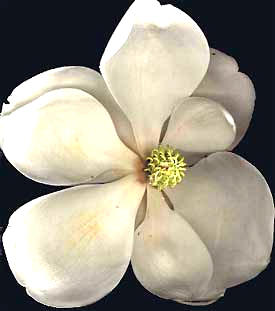
So the day plants produced flowers... I've been wondering what the first flower looked like. Apparently the first flowers may have been magnolias, which is a wonderful discovery. They also greeted me consistently this summer, with their big luscious petals and their almost unbearably sweet smell, at night, in parks. In a primitive forest with primitive leaves I would have loved to have lain under a magnolia tree. Also, magnolias have lovely, plush fruits, sweet to touch too, though hard, with bright red seeds, waiting, inside.

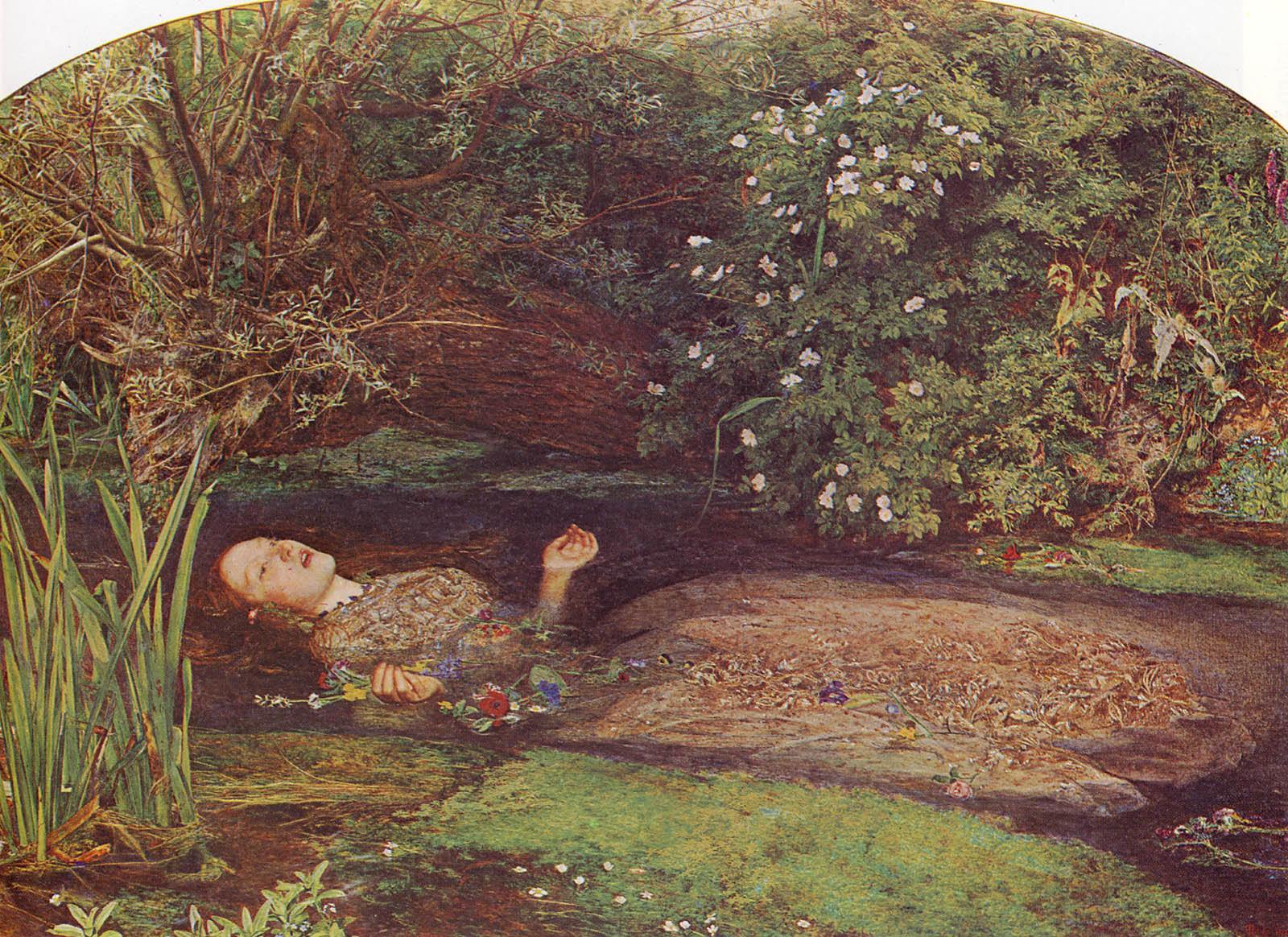
Ophelia 

Why, Ophelia, did you die?  
Your cracked mind, 
and all the different uses for flowers.

Your hair hanging on the wall
for a man who called you whore
and a father, innocent in liking.

Did you not study enough? 
Did language escape you?
The language of flowers, 
so much simpler before,
for you and yours, gentle souls,
for love professed by the body,
that floated by the shore
and crimson somehow, violet,
nosegay, forget-me-not and scarlet
roses tell the sorry tale.

Why, Ophelia did you die?
For loss, for keeping?
Keep coming, Ophelia,
through the cold water,
twisted with leaves and grass
not flowers. Tell your tale,
speak it now, to haunt the man
who in his lies and weakness
made you piecemeal and sore.

He tore a whisp of some sweet fragrance
from your chest and wrestled,
wrestled with another language, not yours.

I'm not sure what Ophelia is doing here, drowned among her flowers. I'm sure she loved to trim them too. A man I knew once likened me to her and this poem came out, a tribute to her, and also to my melancholy, since the man had gone. 

Maybe it is the end of summer which makes me think of the darkness to come, the end of naivity, the passing of girlhood, the marrow of mature life, harvesting the red fruit, or picking up the fruit that has fallen, no longer a flower. 

Ophelia got off the train, poor thing. She gave her flowers. I just learned that daisies mean forsaken love, unhappy love, so it is just as well mine are no longer blooming, though I thought I read they meant innocence. Maybe it is the same thing, or that one, necessarily, leads to the end of the other.

There's rosemary, that's for remembrance. Pray you,
love, remember. And there is pansies, that's for thoughts...
There's fennel for you, and columbines. There's rue for
you, and here's some for me. We may call it herb of grace o'
Sundays. O, you must wear your rue with a difference!
There's a daisy. I would give you some violets, but they wither'd 
all when my father died.... 
(Shakespeare, Hamlet, Ophelia speaking in Act IV, scene V)

What I love about this scene is Ophelia's bawdy language. Oh, she has lost it, she sees the truth, and learns, too late, that she shouldn't have let him steal her thyme.

Tomorrow is Saint Valentine's day,
All in the morning betime,(55)
And I a maid at your window,
To be your Valentine.
Then up he rose and donn'd his clo'es
And dupp'd the chamber door,
Let in the maid, that out a maid(60)
Never departed more.

I think I'm still getting over the loss of mine.

By Gis and by Saint Charity,
Alack, and fie for shame!(65)
Young men will do't if they come to't
By Cock, they are to blame.
Quoth she, 'Before you tumbled me,
You promis'd me to wed.'
(He answers:)
'So would I 'a' done, by yonder sun,(70)
An thou hadst not come to my bed.'

But I'm not about to die over it.


Tuesday, August 23, 2011

L'éternel retour

Reality is strange. Have you ever felt like you were going around again and again, seeing something you've seen before? Sometimes even when things are brand new there is a feeling of déjà vu. Sometimes I think, can't I just get off this train? You can't, here you are, or you don't, and then suddenly, one day, you do, but maybe then you just get back on somewhere else, who knows?


Untitled
 
I thought of kissing you on the train platform
and how you didn’t stop
and how the trains left
but then returned
(as though this poem should be nostalgic
but it ends with a reunion)
or how kissing ends
but then we kiss again;
our lips don’t really change.

Nor do tracks.

For every leaving,
there is a coming back.

L'éternel retour.
It is interesting that the Cocteau movie with this title is translated into English as Love Eternal. In my last post, I was thinking about Benjamin wondering about clouds and ruins, and how the two juxtaposed spell eternity. What is eternal? Maybe an inbetween place of juxtaposition, one thing next to another, a kind of eternal relation, or maybe that is all that is itself eternal, relation, you to me and me to you and to someone else again. It doesn't seem so sinister that way, and means there is something eternal about writer to reader and reader becoming writer. Maybe the relationship of word to word is also eternal. And before words?

"O Zarathustra," said then his animals, "to those who think like us, things all dance themselves: they come and hold out the hand and laugh and flee - and return.  Everything goes, everything returns; eternally rolls the wheel of existence.  Everything dies, everything blossoms forth again; eternally runs on the year of existence.  Everything breaks, everything is integrated anew; eternally builds itself the same house of existence.  All things separate, all things again greet one another; eternally true to itself remains the ring of existence.  Every moment begins existence, around every 'Here' rolls the ball 'There.  ' The middle is everywhere.  Crooked is the path of eternity”. 

Friedrich Nietzsche, Thus Spoke Zarathustra: a Book for Everyone and No-one. Also Sprach Zarathustra: Ein Buch für Alle und Keinen - The Convalescent

I'm not sure, but I'll build this house, this year. I'll laugh at what never ends, with a crooked smile.